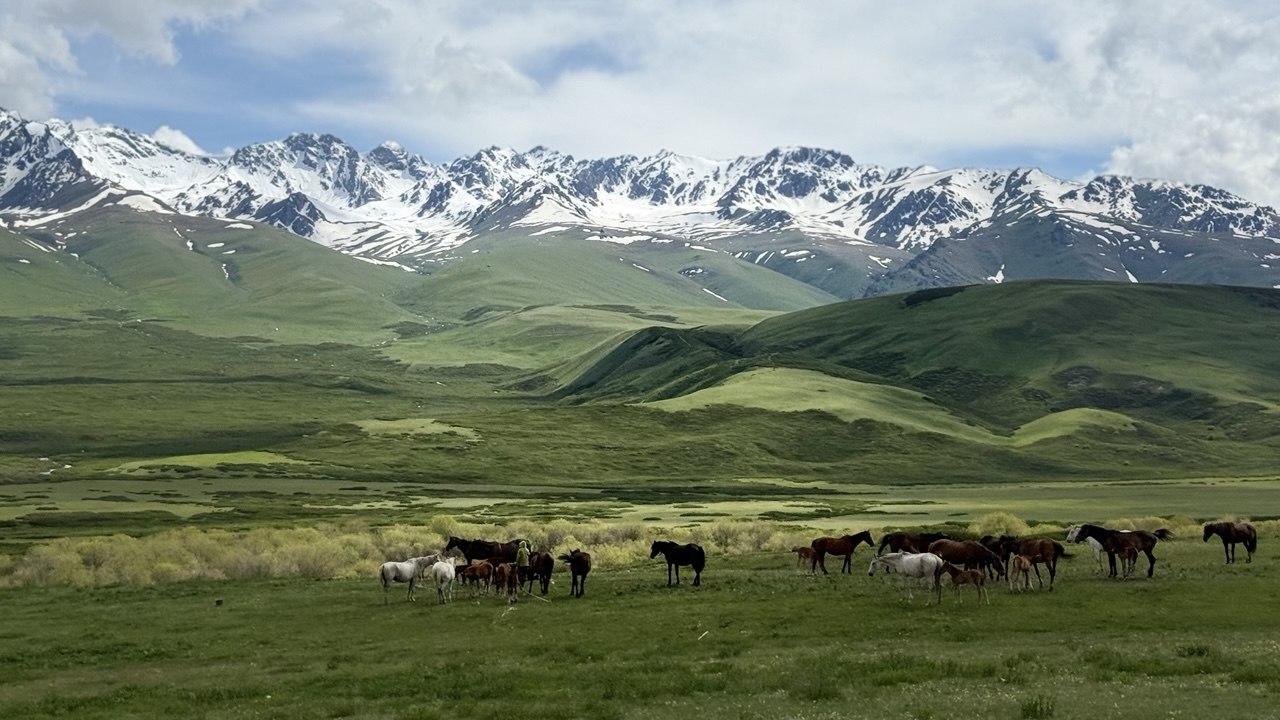
Most travel content about Central Asia is written by someone who spent three days here and copied a government press release. At NovaTravel, we don’t do that. We live this region. What follows is a working calendar, not a fantasy: fourteen festivals, seven regions, one country that still moves to the rhythm of a horse at full gallop, not an algorithm.
No poetry for poetry’s sake here. Just dates, places, and the honest details of how to actually be there. Because a trip that changes you starts with facts you can trust, not a mood board.
Why 2026, specifically
“Regenerative tourism.” “Slow travel.” “Real connection over content.” The industry just discovered these words. Kyrgyzstan has been living them for centuries, long before anyone put them on a slide deck.
In 2026, the world finally gets a front-row seat: the country hosts the World Nomad Games in Bishkek and on Lake Issyk-Kul, August 31 to September 6, an international platform for traditional sports and nomadic culture that draws global attention to the entire region. Registration and program: worldnomadgames.org.
This single event anchors the whole year. Build your journey around it, and let the smaller festivals fill in the story the Games only hint at.
What makes Kyrgyzstan different
Kyrgyzstan never had a coastline, an empire, or an easy path through history, and that’s exactly why its culture survived intact. For most of its existence, this land wasn’t a country with fixed borders, it was a corridor: a branch of the Silk Road where caravans from China, Persia, and the Mediterranean crossed paths in the shadow of the Tien Shan. The people who called these mountains home didn’t build cities to defend. They built a way of life around movement.
That way of life is called jailoo, the seasonal migration to high summer pastures, and it still happens every year, not as a reenactment, but as agriculture. Families pack their yurt, their herd, and generations of knowledge, and move to elevations above 3,000 meters where the grass is richer and the air is thinner. A yurt itself is not a tent. It’s an engineering tradition passed down through hands, a lattice frame (kerege) and curved roof poles (uuk) that a family can raise in under two hours and that has kept nomadic households warm through winters that would break most modern shelters.
Soviet rule tried to settle this way of life into collective farms. It didn’t fully succeed. What you’ll find today in villages like Kyzyl-Tuu or Kochkor is a culture that absorbed a century of outside pressure and kept its core intact: hospitality as a sacred, non-negotiable duty, craft (felt-making, wool-spinning, yurt-building) taught mother to daughter rather than sold as a workshop, and horses treated not as transport but as extensions of the family.
This is the context every festival on this list sits inside. When you watch a shyrdak carpet being cut by hand, or an eagle released from a hunter’s glove, you’re not watching a performance staged for visitors. You’re watching a continuous, living inheritance that simply opened its doors a little wider this year.
World Nomad Games
Everyone in travel is currently obsessed with “regenerative tourism,” “slow travel,” “real connection over content.” Fine words. Kyrgyzstan has been doing all of it for centuries, it just never had a marketing department. In 2026 that changes a little: the country hosts the World Nomad Games in Bishkek and on Lake Issyk-Kul, August 31 to September 6, an international platform for traditional sports and nomadic culture that pulls global attention to the whole region. Registration and program: worldnomadgames.org
That single event raises the profile of everything else on this list. Use it as your anchor and build the rest of your year around it.
The full 2026 calendar
| # | Festival | Region | Location | Dates (2026) |
|---|---|---|---|---|
| 1 | Silk Road Freeride | Issyk-Kul | Jyrgalan village | Jan 15 to 20 |
| 2 | Winter Gastro Week | Issyk-Kul | Karakol city | Jan 27 to 31 |
| 3 | Shyrdak Festival | Jalal-Abad | Ala-Buka village, Ala-Buka district | May 29 |
| 4 | Muras Festival | Naryn | Chaek village, S. Isabekova Recreation Park | June 24 |
| 5 | CBT Tamchy, Horse Games and Birds of Prey | Issyk-Kul | Tamchy village, Issyk-Kul lake | June 23 and Aug 20 |
| 6 | CBT Kyzyl-Oi, National Equestrian Games | Chuy (Suusamyr valley) | Kyzyl-Oi village | June 29 and Aug 3 |
| 7 | Jaichy Agro-Fest | Issyk-Kul | Jaichy yurt camp, Kok-Sai village, Ton district | July 6 |
| 8 | Snow Leopard Ecofest Kemin | Chuy | Kemin district | July 11 |
| 9 | CBT Yurt Festival Kyzyl-Tuu | Issyk-Kul | Kyzyl-Tuu village | July 18 |
| 10 | CBT Kochkor Fest | Naryn | Song-Kol lake, Batai Aral | July 28 |
| 11 | CBT Bokonbaev, Birds of Prey Festival | Issyk-Kul | Jaichy yurt camp | Aug 8 |
| 12 | Shyrdak Master of the Year | Chuy | National Museum of Fine Arts (Gapar Aitiev), Bishkek | Sept 5 |
| 13 | CBT Talas, Manas and Nomad Games | Talas | Talas city | September |
| 14 | Bishkek Travel Fest | Chuy | Ata-Turk Park, Bishkek | Sept 26 |
Separate from the table: World Nomad Games 2026, Aug 31 to Sept 6, Bishkek and Issyk-Kul.
Winter: the calendar starts in silence, not spectacle
Most people assume the season opens with felt carpets and eagles. It doesn’t. It opens with snow. Silk Road Freeride in Jyrgalan (Jan 15 to 20) is a backcountry skiing and snowboarding event in a village that quietly turned itself into one of the best freeride hubs in the Tien Shan. Right after it, Karakol runs Winter Gastro Week (Jan 27 to 31), a week built around Kyrgyz cuisine, from boorsok to modern reinterpretations of nomadic staples by local chefs. Nobody puts this on a postcard. That’s exactly why it’s worth going.
Spring into early summer: craft, not spectacle
May 29, the Ala-Buka district in Jalal-Abad hosts the Shyrdak Festival, dedicated to the felt carpet that UNESCO recognizes as intangible cultural heritage. Multiple generations of women in one family, cutting and stitching by hand. You will not find that skill on YouTube.
June 24, Chaek village in the Naryn region hosts the Muras Festival (“heritage”), combining folklore, craft and local gastronomy in the heart of the central Tien Shan.
Summer: this is where the real economy of the calendar lives
Summer carries most of the weight. This is peak nomadic season, and it’s not staged for cameras, it’s happening whether you show up or not.
Tamchy (June 23 and Aug 20), on the north shore of Issyk-Kul, combines national horse games (ulak tartysh, tyiyn enmey) with birds of prey demonstrations.
Kyzyl-Oi in the Suusamyr valley (June 29 and Aug 3) is built entirely around equestrian sport: ulak tartysh, kyz kuumai (chase the girl), er enish (horseback wrestling), plus a folk concert and Kyrgyz food. Operators running this event typically charge around 2,000 KGS including lunch. Confirm the current price locally, it changes.
July 6, the Jaichy yurt camp near Kok-Sai village (Ton district) hosts the Jaichy Agro-Fest, focused on farming and craft in the Kok-Sai valley, from herding to felt-making, with hands-on yurt-building workshops.
July 11, Kemin district runs the Snow Leopard Ecofest, centered on conservation and ecotourism in the northern foothills of the Kyrgyz range.
July 18, Kyzyl-Tuu village runs its own festival. This is not a random location. Kyzyl-Tuu is effectively the yurt-building capital of the country, where nearly every household is a multi-generation craft workshop for the lattice frame (kerege), the dome poles (uuk) and the felt covering. Guests get to build, not just watch. That distinction matters more than any brochure will tell you.
July 28, on the shore of high-altitude Lake Song-Kol (Batai Aral, Naryn region), CBT Kochkor Fest culminates in salburun, traditional hunting with golden eagles, falcons and taigan hunting dogs. Dinner and a fire under a sky with zero light pollution above 3,000 meters. That alone is worth the drive.
August 8, the Jaichy yurt camp hosts a second birds of prey festival, run by the Bokonbaev CBT community, one of the country’s main centers for traditional falconry.
Autumn: the calendar closes in the city, not the mountains
September 5, the National Museum of Fine Arts (Gapar Aitiev) in Bishkek hosts Shyrdak Master of the Year, a competition and exhibition where recognized felt-carpet masters compete for the title. This is the one event on the list that happens indoors, in a museum, not in a field.
In September, Talas hosts a festival built around the epic of Manas, the largest oral epic in Turkic culture, featuring a manaschy (epic reciter) and national equestrian games.
Finally, Sept 26, Ata-Turk Park in Bishkek runs the Bishkek Travel Fest, the closing point where agencies, CBT communities and travelers meet up before winter resets the whole cycle.
How to actually book this (the part everyone skips)
Most village-level CBT festivals do not run a centralized ticketing system. This is grassroots, community-run tourism, not a commercial show with an online box office. Here’s the working process:
- Go through CBT Kyrgyzstan directly. cbtkyrgyzstan.kg lists local offices (Karakol, Kochkor, Naryn, Talas and others) where you confirm current dates and pricing, usually 2,000 to 2,600 KGS including lunch.
- Use a KATO member operator if you want logistics handled. The verified list at kato.kg helps you string festivals into a route and handle transfers, since most of these locations (Song-Kol, Suusamyr, Jaichy) sit well off paved roads.
- For the World Nomad Games, registration and the program are on worldnomadgames.org
- For visas and general tourism policy, check tourism.gov.kg Citizens of more than 60 countries can enter Kyrgyzstan visa-free, which removes one major friction point from planning around a specific date.
One more thing nobody tells you: rural festival dates shift by a few days depending on weather, harvest timing, and the seasonal move of livestock to summer pastures (jailoo). That’s not disorganization. That’s the calendar doing what it’s always done. Confirm exact dates two to three weeks before you travel, not two to three months.
The actual point of all this
The World Nomad Games will get the stadiums and the camera crews. Fine. But the real value of this calendar sits in the small events: a yurt raised by a family that will actually live in it all summer, not a crew building a set; a felt carpet contest judged by women who’ve been doing this for fifty years, not tourists; an eagle hunt happening because the skill needs a next generation to carry it, not because it photographs well.
Fourteen points on a map. Seven regions. One calendar moving at the speed of a horse at full gallop. The real question isn’t whether you can hit all fourteen. It’s which one you start with.